
Complete Wound Care Guide: Healing Stages, Infection Prevention & Cleaning Methods
Discover evidence-based wound care strategies including sutured wound care, infection prevention, wound cleaning methods, and healing stages. Learn expert clinical tips to promote faster recovery and optimal scar healing.
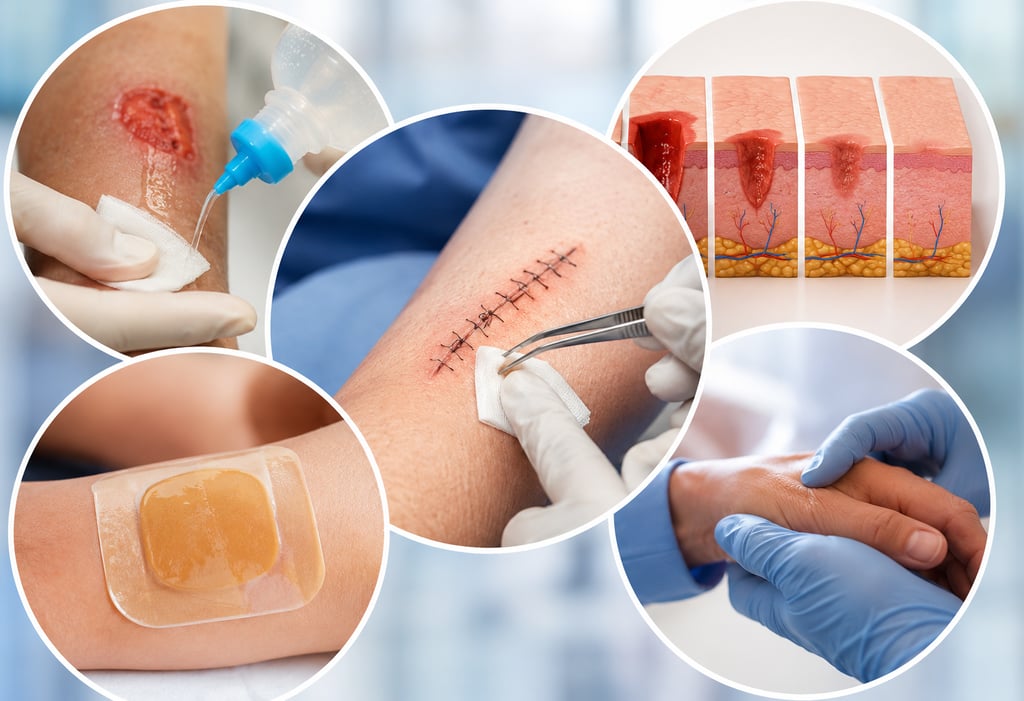
Comprehensive Guide to Modern Wound Care: Healing, Prevention, and Clinical Best Practices
Wound care is no longer limited to simple dressings and antiseptics. Modern wound management combines evidence-based medicine, microbiology, tissue physiology, and patient-centered care to achieve faster healing, reduced infection risk, and improved cosmetic outcomes.
This in-depth guide covers:
Wound care recommendations for sutured wounds
Healing wounds caused by skin picking
Professional wound care experiences (NP perspective)
Wound healing stages with visual explanation
Infection prevention strategies
Best methods for cleaning wounds
Understanding the Biology of Wound Healing
Every wound — surgical, traumatic, or chronic — follows a predictable biological timeline.
1. Hemostasis Phase (Minutes–Hours)
Blood clot formation stops bleeding
Platelets release growth factors
Initial protective barrier forms
Clinical insight: Excess manipulation during this phase disrupts clot stability and delays healing.
2. Inflammatory Phase (Day 1–4)
Neutrophils and macrophages remove bacteria and debris
Redness, warmth, mild swelling occur
Normal inflammation ≠ infection.
Signs of infection:
Increasing pain
Purulent drainage
Expanding redness
Fever
3. Proliferative Phase (Day 4–21)
Fibroblasts produce collagen
Angiogenesis develops new blood vessels
Granulation tissue fills the wound
Moist wound environments dramatically accelerate this stage.
4. Remodeling Phase (Weeks–Months)
Collagen reorganizes
Scar strength increases up to 80% of normal skin
➡️ Patients often stop care too early during this phase.
For deeper understanding of chronic wound physiology and treatment evolution, see related clinical discussions inside the ATP Medikal wound care blog:
👉 Modern wound management insights
Wound Care Recommendations for Sutured Wounds
Sutured wounds require protection, cleanliness, and tension control.
First 48 Hours
Keep dressing clean and dry
Avoid unnecessary dressing removal
Do NOT apply creams unless prescribed
Cleaning Protocol
Wash hands thoroughly
Use sterile saline or clean running water
Pat dry — never rub
Apply non-adherent dressing if drainage exists
Critical Mistakes Patients Make
Overcleaning with strong antiseptics
Using alcohol or hydrogen peroxide daily
Premature suture removal
Advanced postoperative wound care principles are discussed in surgical recovery articles available here:
👉 Post‑surgical wound care resources
Healing Wounds Caused by Skin Picking (Excoriation Injuries)
Skin picking injuries behave differently from surgical wounds because they involve repeated trauma.
Why They Heal Slowly
Continuous micro-injury resets healing phase
Increased bacterial colonization
Chronic inflammation prevents epithelialization
Evidence-Based Recovery Strategy
✔ Keep wounds covered (occlusion reduces urge to pick)
✔ Use silicone gel or hydrocolloid dressings
✔ Maintain moisture balance
✔ Address behavioral triggers
Professional tip: Occlusive dressings reduce manipulation by up to 60% in dermatologic studies.
You can explore chronic wound behavior and patient-care approaches through educational wound management discussions here:
👉 Chronic wound education articles
Experiences and Advice from Wound Care Nurse Practitioners (NP Perspective)
Across advanced wound centers, clinicians consistently observe similar healing patterns.
What Experienced NPs Emphasize
1. Moisture Balance Is Everything
Dry wounds heal slower than appropriately moist wounds.
2. Dressing Choice Matters More Than Medication
Modern wound healing focuses on:
Exudate control
Bacterial balance
Microenvironment optimization
3. Patient Compliance Determines Outcome
Even the best therapy fails without:
Regular dressing changes
Pressure relief
Nutritional support
4. Early Intervention Prevents Chronicity
Many chronic wounds begin as minor untreated injuries.
Clinical case discussions and professional wound-care experiences are frequently explored in ATP Medikal educational blog topics:
👉 Professional wound care case discussions
How to Prevent Infection in Wounds
Infection prevention is the cornerstone of successful healing.
Golden Infection-Prevention Rules
✅ Hand Hygiene
Most wound infections originate from contact contamination.
✅ Proper Irrigation
Normal saline irrigation reduces bacterial load without tissue toxicity.
✅ Correct Dressing Selection
Dry wound → moisture-retentive dressing
Wet wound → absorptive dressing
✅ Avoid Cytotoxic Overuse
Excess antiseptic destroys fibroblasts and delays healing.
✅ Monitor High-Risk Patients
Diabetes
Vascular disease
Smoking history
Immunosuppression
Best Methods for Cleaning Wounds
Cleaning is often misunderstood. The goal is decontamination without tissue damage.
Recommended Cleaning Hierarchy
MethodUse CaseNotesRunning potable waterMinor woundsSafe and effectiveSterile salineSurgical/chronic woundsGold standardAntiseptic solutionsContaminated wounds onlyLimited durationHydrogen peroxideInitial debris removalNot for repeated use
Irrigation Principles
Use gentle pressure
Avoid scrubbing viable tissue
Remove debris, not healing cells
Modern clinical wound cleansing strategies are discussed across educational wound care resources here:
👉 Evidence‑based wound care learning hub
Advanced Factors That Accelerate Healing
Many patients overlook systemic contributors:
Nutrition
Protein deficiency delays collagen synthesis
Vitamin C and Zinc support tissue repair
Oxygenation
Adequate perfusion is essential for fibroblast activity.
Pressure Management
Offloading prevents tissue ischemia.
Modern Therapies
Negative Pressure Wound Therapy (NPWT)
Advanced foam dressings
Bioactive wound materials
Final Clinical Takeaway
Successful wound care is not about a single product or dressing — it is about managing the wound environment over time.
The universal healing principles are:
Clean but not aggressive care
Moisture balance
Infection prevention
Consistent follow-up
Patient education
When these fundamentals are respected, most wounds — surgical, traumatic, or behavioral — progress naturally toward safe closure and optimal scar formation.
Adres: Now Bomonti, Cumhuriyet Mah, Silahşör Cd. No:75 Sitesi Kat:2, 34000
Şişli/İstanbul
Tel: +90532 638 29 40
0212 825 23 23
info@atpsaglik.com
© 2021. All rights reserved.